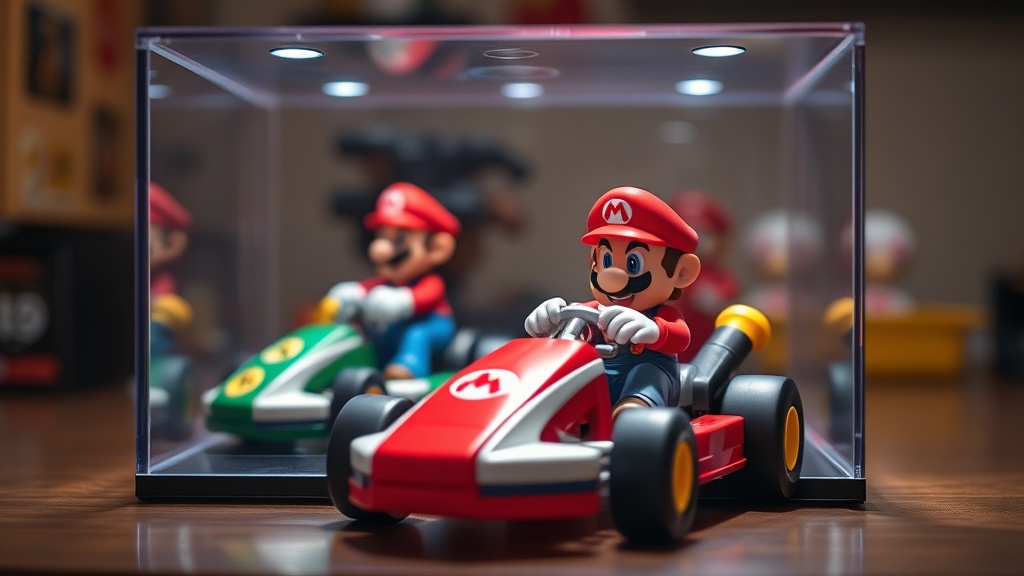
Building a Specialized Display Case for High-Value Mario Kart Figures

Imagine you finally tracked down a mint-condition, limited edition Mario Kart Gold Bowser figure. You've spent months scouring auction sites and private forums, and now it's finally sitting on your desk. But instead of putting it on a standard bookshelf, you realize the ambient light and dust are already starting to take a toll. A generic shelf won't cut it for high-end gaming collectibles. You need a dedicated setup that manages light exposure, temperature, and visibility. This post covers the technical requirements for building a display system that keeps your most prized racing gear in pristine condition.
A professional display isn't just about looking good; it's about preservation. Most collectors overlook the fact that even the most durable PVC or resin figures can degrade if they aren't housed correctly. When you're dealing with high-value items, the environment is just as important as the item itself. We'll look at materials, lighting, and structural integrity to ensure your collection stays as sharp as a Blue Shell hit.
Which Materials Keep Figures Safe From Damage?
The first decision you'll face is the material for your display case. You might be tempted by cheap acrylic, but you have to look closer at the chemical composition. High-grade acrylic (PMMA) is the gold standard because it's more resistant to UV rays and doesn't off-gas as much as cheaper plastics. If you use a low-quality plastic, you might find a strange chemical smell inside your case—this is a sign of degrading polymers that can actually damage the paint on your figures over time.
When selecting your casing, keep these factors in mind:
- UV Resistance: Standard glass allows much more UV light through than specialized museum-grade glass. If your display sits near a window, you're asking for trouble.
- Non-Reactive Surfaces: Ensure the surfaces touching your figures are chemically inert. Some cheap rubberized mats can react with the paint on vintage Mario Kart figurines.
- Airflow: A completely airtight seal sounds good, but it can actually trap heat and moisture. A tiny bit of air exchange is often better for long-term stability.
For those interested in the chemistry of materials, the ScienceDirect database offers deep dives into how polymers degrade, which is helpful for understanding why certain plastics fail over time.
How Do I Prevent Light Damage in My Collection?
Light is the silent killer of gaming collectibles. It's not just about the brightness; it's about the spectrum. UV radiation can cause pigments to fade—turning a vibrant red Mario into a dull, washed-out version of himself. This is particularly dangerous for items with high-gloss finishes or delicate paintwork.
To combat this, you shouldn't just rely on a dark room. You need to control the light source. LED lighting is the preferred choice for modern collectors because it produces very little heat and lacks the harmful UV output found in incandescent bulbs. However, even with LEDs, you need to be careful about placement. If the light source is too close to a figure, the localized heat can cause the material to expand and contract, leading to micro-cracks in the paint.
I always suggest using a dimmable LED system. This allows you to highlight your pieces during a viewing without leaving them under intense light 24/7. It's a small change that makes a massive difference in the longevity of your collection. If you want to see how professional museums handle light, check out the guidelines provided by the Getty Conservation Institute.
Recommended Lighting Setup for Collectors
| Light Type | UV Output | Heat Generation | Best Use Case |
|---|---|---|---|
| Incandescent | High | Extreme | Avoid entirely |
| Halogen | Moderate | High | Short-term display only |
| Standard LED | Very Low | Low | Daily display |
| Museum Grade LED | Near Zero | Minimal | High-value centerpiece |
Is Humidity a Problem for My Display Case?
Many collectors forget that humidity can be just as destructive as light. If you live in a damp climate, your display case might become a breeding ground for mold or even cause metal components on die-cast items to oxidize. This is especially true if you have a mix of plastic and metal-based collectibles in the same enclosure.
To manage this, you can use silica gel packets, but don't just toss them in the bottom and forget about them. They have a saturation point. Once they've absorbed their limit, they stop working. For a more permanent solution, look into small, rechargeable electronic dehumidifiers designed for display cases. They're compact and can be tucked away in a corner without distracting from the view. A stable environment means the moisture levels stay consistent, preventing the "breathing" effect where materials expand and contract constantly.
A well-managed case should have a constant humidity level, ideally between 40% and 50%. If you see any fogging on the inside of your glass or acrylic, you've already gone too far. This is a sign that your environment is unstable and needs immediate attention. Don't wait for the damage to become visible; prevention is much cheaper than replacement.
When building your setup, remember that every piece of your collection is unique. A standard plastic figure might handle a little heat, but a rare, hand-painted resin piece will not. Treat your display as a piece of equipment, not just a shelf. It's the line between a hobby and a serious collection. Keep your eyes on the details, and your Mario Kart pieces will look just as good in twenty years as they do today.