How to Spot Counterfeit Mario Kart Figures Before You Buy

How Can You Tell a Fake Mario Kart Figure from the Real Thing?
So you've finally tracked down that elusive Mario Kart Wii Metal Mario figure — the one that completes your cup trophy display. But the price seems suspiciously low, and the seller's photos look a bit off. How do you know you're getting the genuine article instead of a knock-off that'll yellow and crack within months? Counterfeit collectibles have flooded the market over the past decade, and Mario Kart merchandise — with its broad appeal and recognizable characters — has become prime territory for unscrupulous manufacturers. Learning to authenticate your purchases isn't just about protecting your wallet (though that's important). It's about ensuring your collection maintains its value, displays properly, and doesn't fall apart when you finally unbox it.
The counterfeit problem has grown significantly since 2015, when factory overruns and third-party manufacturers began producing convincing duplicates of popular figures. These aren't the obvious fakes from flea markets anymore — some copies use similar molds, comparable paint applications, and packaging that's nearly indistinguishable from legitimate releases. The difference shows up months later, when plasticizers leach out, joints loosen, or paint begins to flake. For collectors who've spent years hunting specific variants — like the Japanese-exclusive Super Mario Kart die-cast karts or the Club Nintendo Mario Kart 7 trophies — getting burned by a fake stings particularly hard.
What Are the Most Common Red Flags on Counterfeit Packaging?
Start your inspection before you even open the box. Legitimate Nintendo products carry specific markings that counterfeiters often miss or reproduce incorrectly. Check the Nintendo seal of quality — on authentic products, this oval seal features crisp, consistent printing with clear "Official Nintendo Seal" text. Counterfeit versions frequently show bleeding colors, slightly different fonts, or placement that's just a millimeter off from standard positioning. The seal should appear on the front of the packaging, typically in the lower right or left corner depending on the region.
Barcode scrutiny matters more than most collectors realize. Authentic Mario Kart merchandise uses specific barcode prefixes that correspond to Nintendo's manufacturing partners. For Japanese releases, look for 4902370 prefixes (Bandai) or 045496 (Nintendo's own distribution). North American releases typically carry 0 45496 or 0 45996 sequences. Counterfeit products often use generic barcodes, duplicate codes from unrelated products, or numbers that don't match the item description. You can verify barcode authenticity through GS1's database — legitimate manufacturers register their product codes properly.
Printing quality reveals plenty. Authentic Nintendo packaging uses high-grade cardboard with consistent color matching across production runs. The reds should be deep and slightly warm — not orange-tinted or washed out. Mario's blue overalls carry a specific Pantone shade that counterfeit packaging rarely nails. Look closely at text sharpness: legitimate products feature crisp, readable small print (copyright information, manufacturing locations, safety warnings) even at tiny sizes. Blurry text, especially in multiple languages, suggests a copy made from scanned packaging rather than original production files. The cardboard texture matters too — authentic boxes feel substantial with a slight matte finish, while counterfeits often use glossy, thin stock that flexes easily.
Which Physical Details Reveal a Fake Figure?
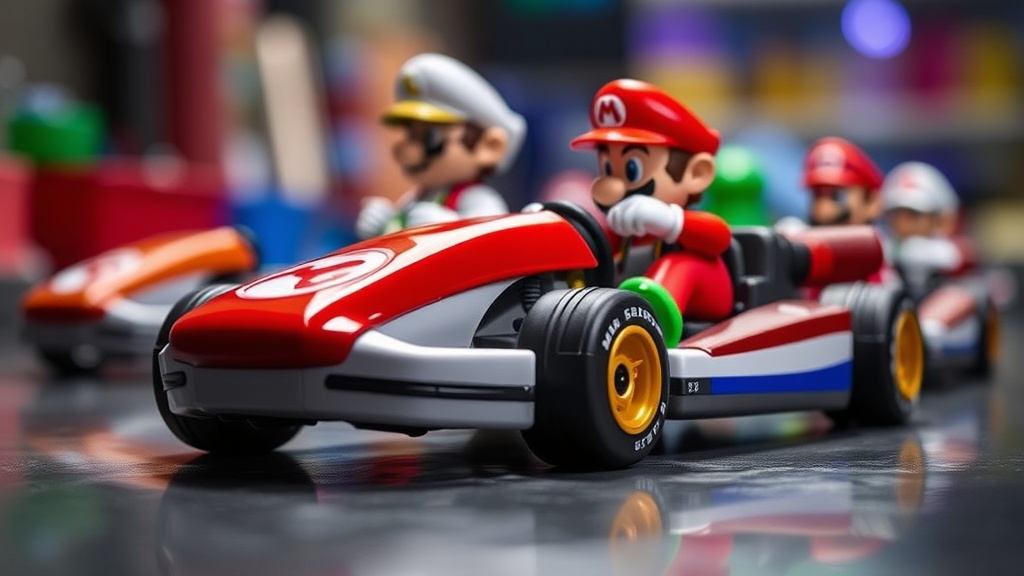
Once you've examined the packaging, turn your attention to the figure itself. Mold quality separates authentic pieces from copies immediately. Nintendo-licensed manufacturers — Bandai, Takara Tomy, Jakks Pacific — use precision steel molds that capture fine details: the texture of Mario's denim, the tread pattern on kart tires, the subtle panel lines on vehicles. Counterfeit molds, typically aluminum or lower-grade steel, lose these details through wear and inferior machining. Compare suspected pieces against reference photos from the Super Mario Wiki — pay attention to areas like hands, hair strands, and vehicle mechanics where precision matters most.
Paint application follows consistent patterns on legitimate releases. Nintendo's quality control requires specific masking techniques that create clean lines between colors — Mario's glove cuffs, the white circle on his cap, the red M logo. Counterfeit figures often show overspray, uneven boundaries, or slightly different color temperatures. The metallics particularly betray fakes: authentic gold or silver paint on Mario Kart trophies and special editions carries depth and subtle sparkle, while counterfeits use flat, cheap metallics that look painted rather than finished. Check the eyes — Nintendo figures use precise decal or tampo printing for character eyes. Hand-painted eyes (slightly different sizes, asymmetrical placement, visible brush marks) indicate counterfeit production.
Material composition differs significantly between authentic and fake figures. Legitimate Mario Kart collectibles use specific ABS and PVC blends that feel substantial and resist yellowing. Counterfeits often use recycled plastics or lower-grade resins that feel lighter, chalky, or slightly oily to the touch. The weight difference becomes obvious when comparing side-by-side — a genuine Mario Kart 8 Hot Wheels set feels heavier than counterfeit equivalents because of denser plastic and metal components. Joint tolerances matter too: authentic poseable figures maintain positions without sagging, while counterfeits often have loose knees, wobbly stands, or connectors that don't quite click into place.
Where Should You Buy Mario Kart Collectibles to Avoid Scams?
Your sourcing strategy matters as much as your authentication skills. Established collectibles dealers — those with physical locations, return policies, and reputation systems — provide your safest bet for high-value pieces. Stores like Big Bad Toy Store or specialized Nintendo collectibles shops photograph actual inventory rather than stock images, allowing you to verify condition and authenticity before purchase. These retailers have supplier relationships with distributors who handle licensed merchandise directly, eliminating the counterfeit pipeline that affects marketplace sellers.
When buying from individual sellers — eBay, Mercari, Facebook groups — demand specific authentication photos. Request images of the Nintendo seal, barcode, copyright text on the figure's base or back, and any manufacturer stamps. Legitimate sellers of authentic merchandise will provide these without complaint; hesitant or evasive responses suggest uncertainty about origin. Check seller history specifically for Mario Kart or Nintendo sales — established collectors selling duplicates understand authentication and typically document it proactively. Be particularly cautious of "too good to be true" pricing on retired or rare pieces. That $30 Metal Mario that's been selling for $150 consistently isn't a lucky find — it's almost certainly counterfeit.
Japanese auction sites (Yahoo Auctions Japan, Mercari Japan) offer excellent sourcing for domestic releases, but require additional vigilance. Use proxy services with inspection options — White Rabbit Express, ZenMarket, and similar services can photograph items before international shipping, letting you verify authenticity before committing fully. Domestic Japanese counterfeits exist but are less common than Chinese exports; however, "China version" listings on Japanese sites almost always indicate unlicensed production.
Community knowledge protects collectors. Join dedicated Mario Kart collecting groups where members share authentication tips, seller warnings, and reference materials. When a new counterfeit variant appears — and they do regularly — these communities identify markers quickly. Experienced collectors can spot subtle mold differences or packaging variations that indicate fake production runs. Building relationships with other collectors also creates buying opportunities outside public marketplaces, where authenticity concerns diminish significantly.
What Should You Do If You've Already Bought a Fake?
Discovering a counterfeit in your collection isn't the end of the world — it's a learning opportunity (though an expensive one). Document everything: photographs of the item, packaging, seller communications, and transaction records. Marketplaces like eBay offer buyer protection programs that cover counterfeit merchandise — file claims promptly, as windows close after delivery confirmation plus thirty days. PayPal and credit card companies similarly provide dispute resolution for misrepresented goods. Don't feel guilty about pursuing refunds — counterfeit sales hurt the collecting community by diluting values and rewarding dishonest sellers.
If the purchase predates refund options, consider the fake's educational value. Keep it as a comparison piece — having authentic and counterfeit versions side-by-side trains your eye for future purchases. Some collectors even create "rogues galleries" of known fakes, documenting their characteristics to help others avoid similar mistakes. Just be certain to clearly label counterfeits as such, and never attempt to sell them without full disclosure. The collecting community runs on trust, and passing off fakes — even accidentally — damages your reputation permanently.
Finally, adjust your authentication process based on the experience. Every fake encounter teaches specific markers to watch for — particular packaging flaws, common mold shortcuts, or paint issues that repeat across counterfeit production. Update your mental checklist, share what you learned with fellow collectors, and approach future purchases with refined skepticism. The counterfeiters keep improving their techniques, so your authentication skills must evolve too. Stay current through collector forums, reference sites, and manufacturer announcements about new anti-counterfeiting measures. Your diligence protects not just your collection, but the integrity of Mario Kart collecting as a whole.