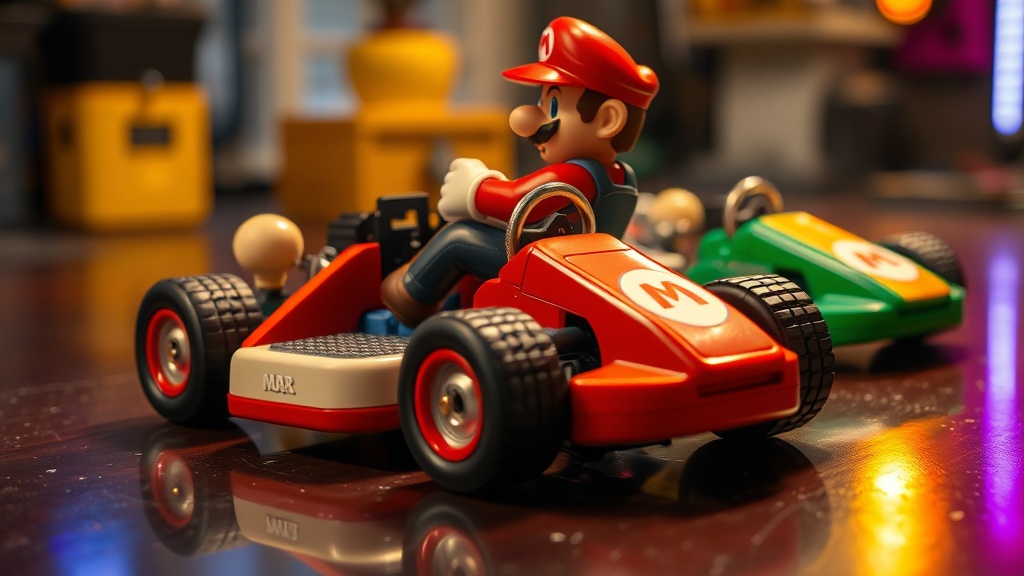
Managing Humidity and Airflow for Rare Mario Kart Die-Cast Models

Most collectors assume that a simple glass display case is enough to protect their high-value Mario Kart die-cast models. They believe that if the item is behind glass, it's safe from the elements. This is a mistake. A sealed case can actually trap moisture inside, creating a microclimate that accelerates oxidation and paint degradation. To keep your collection in top-tier condition, you have to understand how air movement and moisture levels affect metal and paint. This guide covers the specific environmental controls needed to keep your metal karts from looking aged or weathered.
When you're dealing with die-cast metal, you're dealing with a material that is highly sensitive to its surroundings. Even small amounts of moisture in the air can lead to microscopic corrosion on the underside of the chassis or within the wheel axles. If you don't manage the air around your collection, you're essentially setting a timer on the lifespan of your items. We'll look at why air circulation matters more than just a pretty display and how to spot the early signs of environmental damage.
Why Does Humidity Affect Die-Cast Metal?
Humidity is the silent enemy of any serious collector. When relative humidity (RH) climbs above 50%, the air carries enough water vapor to react with the metal components of your models. Even if the metal is plated, moisture can seep into the seams or where the paint meets the metal. This often results in 'zinc rot' or general oxidation. You might notice a dullness in the paint or, worse, a slight pitting on the metal surface.
It isn't just about the metal, though. Many Mario Kart models feature decals or printed-on details that can react to high humidity. If the air is too damp, the adhesive used for certain stickers or the binders in the paint can soften. This leads to peeling or a loss of gloss. Maintaining a steady environment—one that doesn't fluctuate wildly—is the most effective way to prevent these long-term issues. You can find more detailed scientific data on how humidity affects metals at the National Institute of Standards and Technology (NIST) website, which tracks material stability.
How Can I Control Moisture in My Display Case?
If you've already invested in a high-end display case, you shouldn't just stick your models in and walk away. You need to actively manage the internal environment. One of the most effective ways to do this is by using desiccant packs, specifically silica gel. However, you can't just throw a pack in there and forget about it. Desiccants have a saturation point; once they've absorbed their limit of moisture, they stop working.
Here is a practical approach to managing your display environment:
- Use Indicating Silica Gel: Instead of clear beads, use the beads that change color (from blue to pink or orange to green) when they are saturated. This tells you exactly when it's time to replace or recharge them.
- Avoid Direct Sunlight: UV rays don't just fade the paint; they also increase the temperature inside a case, which can drive moisture levels up through evaporation.
- Monitor with a Hygrometer: A small, digital hygrometer tucked inside your case is a cheap way to keep an eye on things. If you see the percentage climbing, you know you need to act.
The goal is to keep the relative humidity between 35% and 45%. Anything higher and you risk the metal issues mentioned earlier; anything much lower and you might actually cause the paint to become brittle over many years. Consistency is the key here. Rapid swings between dry and humid environments are often more damaging than a steady, slightly higher humidity level.
Does Air Circulation Help Protect My Collection?
A common misconception is that a tightly sealed case is better. In reality, stagnant air is often a problem. If moisture gets trapped inside a case because there is no air movement, it stays there. While you don't want to blast your models with a fan, a tiny amount of air circulation can prevent the buildup of stagnant, humid pockets.
If you use a glass cabinet with doors, occasionally opening the doors for a few minutes can help refresh the air. This prevents the 'greenhouse effect' where heat and moisture build up inside. For those with very large-scale collections, a dedicated dehumidifier in the room itself is a much better solution than relying on small packs inside a case. According to the National Weather Service, local humidity levels can change rapidly, so your internal micro-climate needs to be able to withstand those external changes.
When setting up your space, consider the placement of your display. Avoid placing it against an exterior wall that gets cold at night, or near a radiator. These temperature shifts cause the air to expand and contract, which pulls moisture into the case through any tiny gaps in the seals. A stable temperature leads to a stable humidity level, which is the gold standard for any collector.
| Issue | Cause | Prevention Method |
|---|---|---|
| Paint Fading | UV Exposure | UV-filtering glass or away from windows |
| Metal Oxidation | High Humidity | Silica gel and humidity monitoring |
| Paint Cracking | Temperature Swings | Stable room temperature/avoiding heaters |
| Sticker Peeling | High Humidity/Heat | Low RH (35-45%) and airflow |
Keeping your Mario Kart die-cast models in pristine condition requires more than just a shelf. It requires an understanding of the physics of the materials you collect. By monitoring your humidity, using desiccants, and ensuring your air doesn't become stagnant, you're protecting the long-term value of your investment. It’s about being proactive rather than reactive when you notice a change in the collection's appearance.