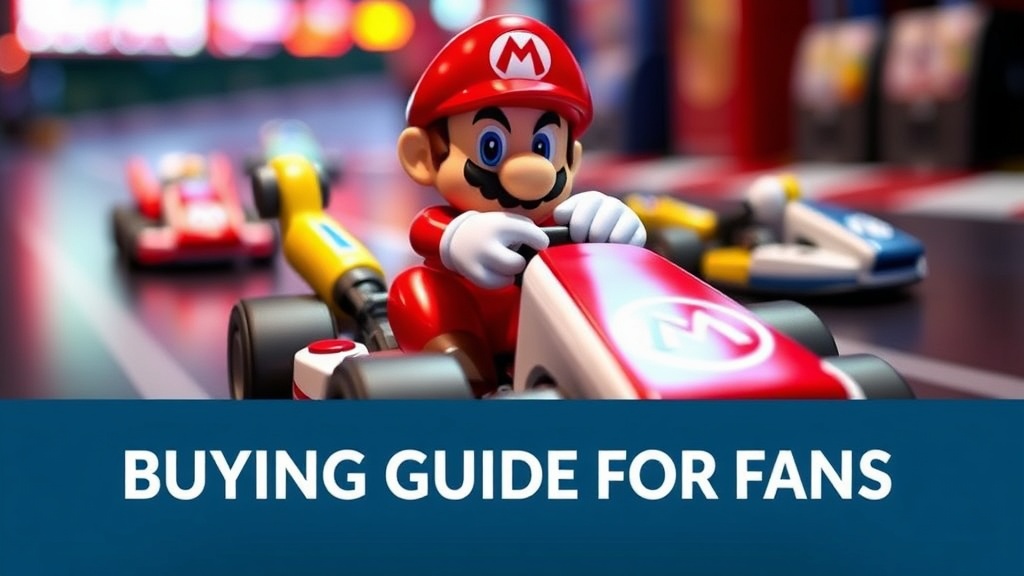
Mario Kart Die-Cast Collectibles Buying Guide for Fans

This guide breaks down everything you need to know before buying Mario Kart die-cast collectibles — from spotting authentic Tomica releases to finding the best display cases for your shelf. Whether you're hunting a vintage Hot Wheels Mario Circuit set or trying to complete the latest Jakks Pacific lineup, the collector market is flooded with options (and more than a few knock-offs). Knowing what to look for saves money, time, and the disappointment of unboxing a scratched, off-brand casting.
What Are the Best Mario Kart Die-Cast Collectibles to Buy Right Now?
The standouts right now are Tomica's premium Dream Tomica series, Jakks Pacific's World of Nintendo die-cast singles, and select Hot Wheels Mario Kart track sets still circulating on the secondary market.
Tomica — produced by Takara Tomy — dominates the high-end segment. Their Dream Tomica No. 158 Mario and No. 159 Luigi feature rubber tires, opening doors on select castings, and paint jobs that match the official Mario Kart portal color palettes exactly. The weight feels substantial in hand. These aren't hollow, plastic shells. The Mach 8 and Standard Kart variants are particularly sought after because the tampo printing includes details as small as the exhaust pipes and dashboard gauges. Tomica also releases limited character waves — Rosalina in the Comet, King Boo in the Standard Kart, and even Bowser in the Badwagon — that sell out within weeks of hitting shelves.
Jakks Pacific targets the mid-range collector who wants variety without importing from Japan. You'll find Mario, Peach, Yoshi, and lesser-known racers like Shy Guy, Dry Bones, and Koopa Troopa. The castings are simpler than Tomica, but the character selection is broader. Here's the thing: Jakks models often lack suspension or interior detail, so they function better as display pieces than as toys for rough play. That said, the recent Jakks "Pipe Frame" sub-series has improved dramatically, with better wheel alignment and more accurate proportions that mirror the in-game karts from Mario Kart 8 Deluxe.
Hot Wheels entered the scene through a partnership with Mattel, releasing track sets like the Mario Circuit Lite and character singles packaged in classic blister cards. The catch? Many of those sets are now out of production. If you see a sealed Hot Wheels Mario Kart track set at retail price, it's usually worth grabbing. On the secondary market, prices for sealed Hot Wheels sets have climbed sharply over the last two years. Individual character cars — especially the Blue Falcon or B Dasher castings — also carry premiums when carded.
How Can You Spot Fake or Low-Quality Mario Kart Die-Cast Models?
You can spot fakes by checking the packaging fonts, the weight of the vehicle, and the quality of the base stampings — authentic models always have clean, sharp lettering and a solid heft.
Counterfeit Mario Kart die-cast cars are everywhere on auction sites. The most common red flag is blurry packaging art. Nintendo licenses are tightly controlled, so official boxes use high-resolution prints with consistent color matching. If the red on Mario's hat looks orange or the "Nintendo" logo appears stretched, walk away. Licensed products also carry a holographic Nintendo seal of quality on the rear of Tomica boxes and a printed licensing block on Jakks Pacific cards.
Next, flip the car over. Tomica base plates should read "TAKARA TOMY" and include a production date. Jakks Pacific castings usually have "JAKKS" or "NINTENDO" molded into the underside. Cheap knock-offs often skip this step entirely or use shallow, sloppy engravings. The paint application is another tell. Official models use tampo printing — thin, crisp lines that won't peel. Fakes rely on stickers or thick, uneven paint that pools around the edges of the vehicle body.
Worth noting: some third-party "custom" castings aren't technically fakes — they're unlicensed reproductions sold as originals. That said, the seller should always disclose if a model is custom-painted or a kitbash. If the listing photos are grainy or pulled from a stock image, that's a warning sign. Ask for a photo of the actual item in hand before you commit. A legitimate seller won't mind.
Where Should You Buy Mario Kart Die-Cast Collectibles for the Best Deals?
The best deals usually come from a mix of local comic shops, dedicated collector conventions, and reputable online marketplaces like eBay and Mercari — but each source carries different risks.
Local shops in Burlington and the Greater Toronto Area often stock Jakks Pacific and Tomica imports at prices that undercut shipping fees. You can inspect the paint in person, haggle a little, and avoid the dreaded "shipping damage" surprise. That said, inventory is unpredictable. One week there's a full peg of Dream Tomica releases; the next week, nothing. Shops like Gamer's World or specialty toy boutiques along Lakeshore Road sometimes get Japanese imports before the big-box stores do.
Conventions are another goldmine. Fan Expo and Toronto Comicon regularly host vendors with sealed cases of World of Nintendo castings. The prices might be slightly higher than online, but you can examine the card condition immediately — no gambles on "mint" photos taken under flattering lighting. The catch? Cash is king at convention booths, and there's rarely a return policy.
Online, eBay remains the largest secondary market for Mario Kart die-cast. Filter by "sold listings" to see what models actually sell for, not what sellers hope for. Mercari and Facebook Marketplace are growing fast for domestic finds, especially loose cars from parents clearing out toy bins. For new releases, Takara Tomy's Tomica division announces upcoming Dream Tomica waves months in advance. Pre-ordering through Japanese retailers like HobbySearch or AmiAmi locks in retail pricing before the North American markup kicks in. If you're patient, Amazon Japan also ships many Tomica items internationally at reasonable rates.
What Factors Determine the Value of a Mario Kart Die-Cast Car?
Value hinges on five main factors: brand reputation, character rarity, packaging condition, production run size, and whether the model includes any exclusive decals or event stickers.
Character selection drives demand more than anything else. Mario and Luigi are always available; they're the baseline. But when Tomica releases a limited run of Rosalina or King Boo, prices jump within days. The same principle applies to Jakks Pacific chase vehicles — certain metallic finish variants ship only one per case, making them genuinely hard to find. A Gold Mario Jakks casting, for example, can sell for three to four times the price of the standard red-hat version.
Packaging matters too. A mint-in-box Tomica Mario Kart 8 Mach 8 will command a premium over a loose example, even if the loose car is in perfect shape. Collectors want the artwork, the Japanese text, and the intact blister. Here's the thing: if you plan to resell later, don't open it. If you're buying purely for the joy of display, a near-mint loose car saves you 30–50%. Condition grading — C10 (mint) down to C6 (acceptable wear) — is becoming standard in die-cast forums, so knowing the lingo helps when negotiating.
Event exclusives carry the highest premiums. The Tokyo Toy Show Dream Tomica Mario (released in limited quantities) and Nintendo Live event variants aren't mass-market items. They're produced in the hundreds, not the hundreds of thousands. Regional packaging differences also affect value. Japanese-market Tomica boxes with full Japanese text often sell for more than export versions with bilingual labels. That scarcity pushes prices into triple digits quickly.
Brand Comparison at a Glance
| Brand | Price Range (USD) | Key Strengths | Best For |
|---|---|---|---|
| Tomica Dream Tomica | $12 – $45 | Premium detail, rubber tires, accurate scaling | Serious collectors |
| Jakks Pacific World of Nintendo | $6 – $15 | Wide character selection, easy availability | Casual collectors, completists |
| Hot Wheels Mario Kart | $8 – $35 (retail / secondary) | Track compatibility, nostalgic blister cards | Track builders, retro collectors |
How Should You Display and Store Mario Kart Die-Cast Vehicles?
Store them upright in dust-free cases, away from direct sunlight and temperature swings, to keep paint and decals pristine for years.
UV light is the silent killer of die-cast collections. Reds fade to pink. Metallics lose their luster. Even LED desk lamps can cause subtle discoloration over time if the cars sit too close. Acrylic display cases with UV-resistant coatings are the safest bet. Brands like IKEA (the DETOLF cabinet) and specialty case makers such as Versatile Display offer affordable solutions that hold dozens of 1:64 scale models without looking cluttered.
Humidity matters too. Burlington's climate swings from humid summers to dry winters, and both extremes damage die-cast. Moisture promotes "zinc pest" — that white, powdery corrosion you sometimes see on older base plates. Toss a few silica gel packets into each display case. They're cheap insurance. If you're storing cars in their original boxes, keep those boxes inside a closet or cupboard rather than an attic or basement where temperatures fluctuate wildly.
If space is tight, wall-mounted acrylic shelves work well. Arrange the cars by wave or by character — there's no wrong way, provided they aren't crammed together. Paint rub happens when metal touches metal. A little breathing room prevents chips. Cleaning is simple: a soft microfiber cloth removes dust, and a can of compressed air blasts debris from wheel wells without touching the paint.
For track enthusiasts who actually run their Hot Wheels Mario Kart sets, keep a separate "runner" fleet and a "shelf" fleet. The runner cars will pick up axle dust and occasional paint scuffs from loop-the-loops. The shelf cars stay pristine. That separation protects your investment without killing the fun. After all, these are toys at heart — even if some of them now cost more than a video game.
Building a Mario Kart die-cast collection is part hunt, part curation. The market rewards patience — jump on a retail Tomica pre-order when it drops, but don't panic-buy a $60 Jakks Pacific common off eBay because you're impatient. Study the base stamps, compare prices against sold listings, and invest in a decent display case before the shelf dust settles.
There's always another wave coming. Nintendo shows no signs of slowing down the licensing, and Mattel's Hot Wheels store occasionally teases new collaborations. Stay connected with collector groups, watch restock alerts, and enjoy the process. After all, every great collection starts with a single casting — the trick is making sure it's an authentic one.