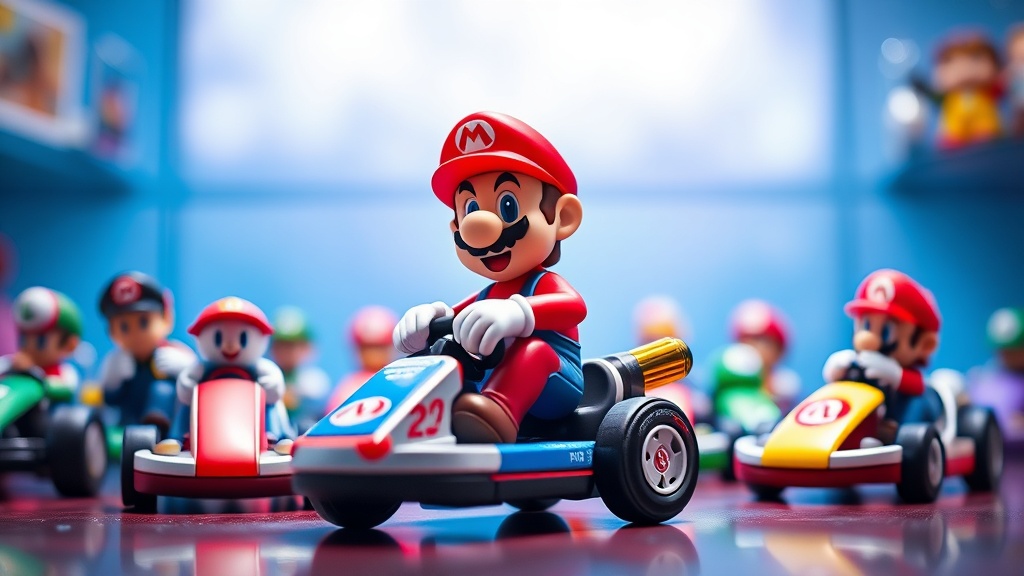
Organizing Your Mario Kart Figure Collection by Rarity and Scale

Organizing Your Mario Kart Figure Collection by Rarity and Scale
You just finished unboxing a highly anticipated set of limited edition vinyl figures, and instead of placing them directly on your shelf, you find yourself staring at a pile of mismatched sizes and varying textures. One figure is a heavy, die-cast metal kart, while the next is a lightweight PVC character. Without a plan, your collection quickly turns into a cluttered heap rather than a curated display. Organizing these items isn't just about making them look pretty—it's about protecting their long-term value and making sure you can actually find that one specific rare variant when you want to show it off.
A well-organized collection serves two purposes: it prevents physical damage from overcrowding and allows you to track the growth of your investment. Whether you collect the small, keychain-sized figures or the larger, more detailed statues, a systematic approach is the only way to keep things manageable. We'll look at how to categorize your items based on material, scale, and rarity to ensure your display remains professional and easy to maintain.
Which Method Should I Use to Categorize My Figures?
The first step is deciding on a primary sorting method. For most collectors, I recommend sorting by Material Type first. This is because different materials have different storage requirements. For instance, metal-based items (like die-cast karts) shouldn't sit directly touching certain types of soft plastics, as chemical leaching can occur over time.
Once you've grouped by material, you can sub-categorize by Scale. In the world of gaming collectibles, scale consistency is a major visual factor. If you have a 1:12 scale figure sitting next to a 1:64 scale vehicle, the proportions will look jarring. Grouping by scale ensures that your display looks cohesive. Here is a common way to group your items:
- The Heavyweights: Die-cast metal karts and heavy resin statues.
- The Mid-Range: Standard PVC vinyl figures (the most common type).
- The Minis: Small-scale blind box figures and keychain-sized items.
If you're looking for more technical details on how different materials interact, the Cornell University Conservation resources offer great insights into how different substances react to their environments, which is a great way to understand why you shouldn't mix certain plastics with metals.
How Do I Arrange My Collection for Best Visibility?
Visibility is the biggest challenge when your collection grows beyond a few dozen pieces. If you simply line them up on a flat shelf, the ones in the front will hide the ones in the back. To solve this, you need to think vertically. Using acrylic risers or tiered steps is a great way to give every character a "stage."
When using tiered displays, keep the tallest items in the back and the smallest in the front. This creates a natural slope that guides the eye. If you have a particularly rare item—perhaps a signed or limited-run figure—it shouldn't be buried in the middle of a row. It needs its own dedicated space. I often suggest using a single, elevated pedestal for your "grail" items. This signals to anyone looking at your collection that this specific piece is the centerpiece.
For those who use glass display cases, remember that lighting can be a double-edged sword. While LED strips can make your colors pop, too much heat or light exposure can actually damage the paint on your figures. You can find more information on the impact of light on collectibles through the Library of Congress preservation guides.
Can I Group Items by Series or Release Year?
Grouping by release year or specific game series (like grouping all items from Mario Kart 8 Deluxe together) is a popular method for collectors who enjoy the historical aspect of their hobby. It turns your collection into a timeline of the franchise's evolution. This is a great way to display your items if you want to show the progression of design styles.
However, this method can be tricky if you have a limited amount of shelf space. A series might have dozens of items, but if you only own three, leaving a large gap in your display can look unfinished. If you choose this route, I suggest using "filler" items—such as themed stands or decorative elements—to bridge the gaps between your pieces. This keeps the collection looking intentional rather than incomplete.
| Sorting Method | Pros | Cons |
|---|---|---|
| By Material | Prevents chemical reactions | Doesn't look "thematic" |
| By Scale | Looks professional/uniform | Can look disorganized by series |
| By Series | Tells a story/history | Can create empty gaps |
Ultimately, the best method is the one that makes you happy when you look at your shelf. If you love the history, go with the series method. If you want a clean, museum-like look, go with the scale and material method. Just remember that as your collection grows, you'll likely need to transition from simple shelving to more advanced modular systems.