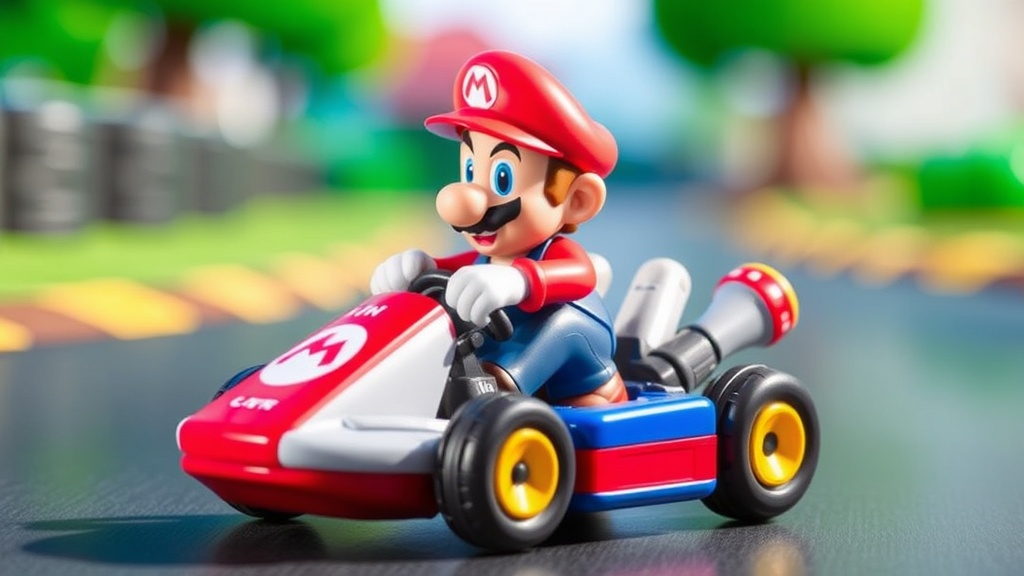
Spotting the Real Deal: An Authenticity Guide for Mario Kart Collectibles

What distinguishes genuine Mario Kart die-cast vehicles from fakes?
Entering the vibrant world of Mario Kart collectibles, especially die-cast vehicles, can be thrilling. Yet, there’s a quiet but persistent misconception that any item bearing the Mario Kart logo—particularly older pieces—is automatically legitimate. This isn't always true. The market, unfortunately, has its share of cleverly crafted fakes and unauthorized reproductions designed to deceive collectors. Understanding the subtle cues that separate a genuine piece from a counterfeit is not just about protecting your investment; it's about preserving the integrity of your collection and celebrating the authentic craftsmanship that Nintendo and its licensed partners put into these cherished items.
When examining a die-cast Mario Kart vehicle, your first line of defense is the overall quality and official branding. Genuine items, regardless of age, tend to exhibit a high standard of manufacturing. Look for crisp paint applications with clean lines, consistent color palettes that match official Nintendo renders, and – crucially – the absence of any paint bleed or overspray. The decals, if present, should be precisely applied, often with a slight sheen, not appearing as cheap stickers that peel easily or have pixelated edges. Unauthorized versions frequently cut corners here, resulting in sloppy paintwork, mismatched hues, or decals that are obviously low-resolution prints.
The molding of the vehicle itself offers significant clues. Authentic die-casts usually feature sharp, well-defined edges and intricate details true to the character or kart they represent. Examine character faces—eyes, mouths, and accessories—for symmetry and fidelity to Nintendo's iconic designs. Counterfeits often display softer, less precise molding, sometimes with visible seam lines or imperfections where the two halves of the die-cast might have been poorly joined. The wheels are another tell-tale sign; genuine wheels spin freely, are securely attached, and have consistent tire tread patterns. Fakes might have wobbly wheels, uneven tread, or feel cheap and flimsy. Always scrutinize the underside of the vehicle for copyright information. You should expect to find "© Nintendo" along with the manufacturer’s mark (e.g., "Hot Wheels" or "JAKKS Pacific") molded clearly into the plastic or metal chassis. If this information is absent, misspelled, or looks crudely stamped, it’s a major red flag.
How do packaging and finer details reveal a collectible's true origin?
Authenticity extends beyond the item itself to its accompanying packaging, a critical — and often overlooked — component of a collectible's verifiable history. For packaged Mario Kart die-casts, the condition and design of the packaging are paramount. Genuine packaging—whether a blister card, box, or display case—will feature high-quality printing, vibrant colors, and clear, readable text. The card stock should feel substantial, not flimsy or cheap. Pay close attention to the