The Ultimate Guide to Building Your Mario Kart Die-Cast Collection

What Are Mario Kart Die-Cast Collectibles and Why Are They Worth Collecting?
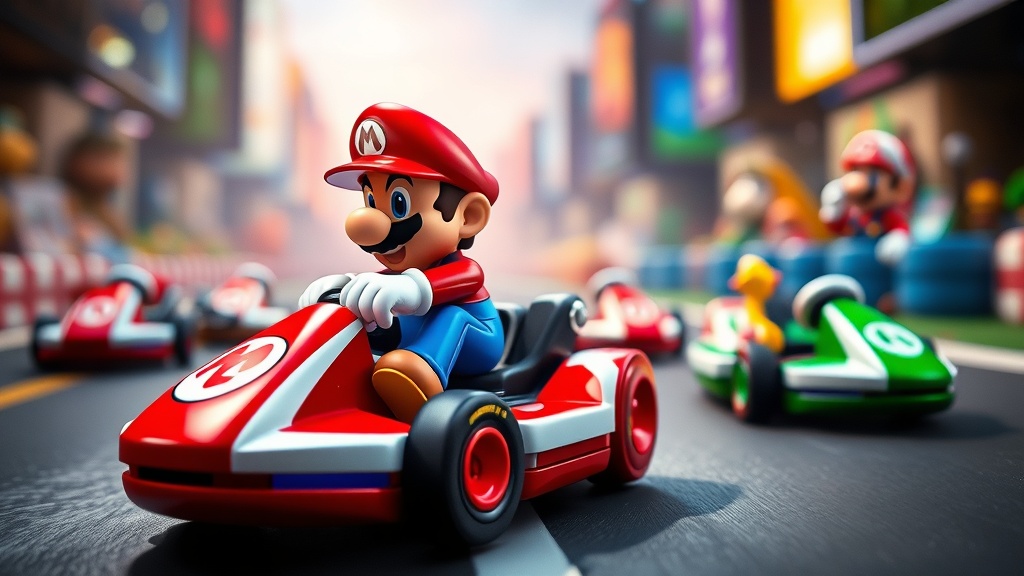
Mario Kart die-cast collectibles are metal-cast miniature vehicles featuring characters and karts from Nintendo's racing franchise, produced by brands like Hot Wheels and Tomy under official license. These aren't plastic toys from the toy aisle—they're detailed, weighted miniatures that capture the personality of Mario, Luigi, Bowser, and the entire roster in palm-sized form. This guide covers where to find rare castings, how to spot fakes, smart storage solutions, and building a collection that actually holds value.
The appeal runs deeper than nostalgia. Unlike video game DLC that vanishes when servers shut down, these physical pieces sit on a shelf. They don't require batteries. The Hot Wheels Mario Kart line launched in 2019, and certain castings—like the first-edition Standard Kart Mario or the Japan-exclusive Gold Mario—now trade for ten times retail. That's not speculation. That's what happens when Nintendo fans with disposable income discover die-cast collecting.
What Are the Best Mario Kart Die-Cast Lines to Start With?
Start with the Hot Wheels Mario Kart Character Cars series, then branch into Tomy's Choro-Q or the premium Bandai Namco figures depending on budget and display space. Not all lines serve the same collector—some prioritize accuracy, others affordability, and a few target the high-end market exclusively.
Here's the thing: Hot Wheels dominates the entry-to-mid-level space. Mattel secured the Nintendo license and produces multiple sub-series under the Mario Kart banner. The Standard line features single-card releases at roughly $4.99 USD. The Track Stars subset includes karts designed to perform on orange track. Then there's the Character Cars line—slightly larger, more detailed, and typically packaged in premium boxes rather than blister cards.
Tomy takes a different approach with their Japanese-market Choro-Q Mario Kart series. These pullback motors feature softer, rounded proportions—distinctly "kawaii" in aesthetic—and they're rarer in North America. Burlington collectors (that's where Omar operates) often import these through specialty shops or eBay sellers in Osaka.
The catch? Tomy releases frequently include characters Hot Wheels hasn't touched yet—Dry Bones, Koopa Troopa, certain alt-costume variants. For completionists, ignoring Tomy isn't an option. It just isn't.
| Line | Scale | Price Range (USD) | Availability | Best For |
|---|---|---|---|---|
| Hot Wheels Standard | 1:64 | $4.99 - $12.99 | Walmart, Target, Amazon | New collectors, budget builds |
| Hot Wheels Track Stars | 1:64 | $5.99 - $14.99 | Toy retailers, online | Play/display hybrid collectors |
| Hot Wheels Character Cars | 1:55 | $9.99 - $24.99 | Specialty stores, Mattel Creations | Detail-focused collectors |
| Tomy Choro-Q | ~1:64 | $15.00 - $45.00 | Import shops, eBay Japan | Variant hunters, completists |
| Jakks Pacific Micro Land | ~1:100 | $3.99 - $8.99 | Discount retailers | Diorama builders, kids |
Where Do You Find Rare and Limited-Edition Mario Kart Die-Cast Models?
Rare Mario Kart die-cast models surface at conventions, through Mattel Creations drops, import retailers like AmiAmi, and occasionally in unexpected retail locations like Burlington's own Cornwall Centre during specialty toy events. The hunt matters as much as the acquisition—maybe more.
Convention exclusives dominate the high-value conversation. San Diego Comic-Con releases from 2020 and 2022 included metallic variants and character combinations (Mario/Yoshi two-packs) that never hit retail. These now command $75-$200 depending on condition and whether the original packaging survived.
Mattel Creations—the company's direct-to-collector platform—operates on a drop model. You'll want notifications enabled. The Gold Mario release from 2021 sold out in four minutes. Four. Minutes. Secondary market prices stabilized around $85, which tells you something about demand stabilization in this niche.
Worth noting: Burlington's geographic position helps Ontario collectors. Toronto's larger convention circuit (Fan Expo, Toronto Comicon) frequently hosts vendors with import stock. The drive from Burlington takes 45 minutes without traffic—an easy Saturday morning run for serious hunters.
Local game stores occasionally surprise. EB Games in Canada, GameStop in the US—these chains receive "Gamer" exclusives that don't always get marketing push. Check endcaps. Check the impulse-buy sections near registers. Ask staff when shipments arrive. Most employees don't care about die-cast; they'll remember you as "the Mario car guy" and flag new inventory.
Red Flags When Buying Online
eBay and Facebook Marketplace move volume, but counterfeit castings exist. Poor paint apps are the easiest tell—official Mattel products use tampo printing with sharp edges. Fakes bleed. The weight differs too; authentic die-cast uses zinc alloy that feels substantial in hand. Plastic fakes feel hollow.
Another warning sign: sellers offering "prototypes" or "factory samples" in bulk. Real prototypes leak occasionally—single pieces, usually damaged, always expensive. Someone offering ten "rare prototypes" at $30 each is selling factory rejects or customs. That said, customs can be gorgeous. Just know what you're buying.
How Should You Store and Display Mario Kart Die-Cast Collections?
Store carded figures in acid-free plastic protectors, displayed die-cast in acrylic cases or dedicated shelving with UV protection, and maintain 40-50% humidity to prevent metal fatigue and paint degradation. Temperature swings kill collections slowly—basements flood, attics bake, and both ruin cardboard.
The collector community divides sharply here. Carded collectors—those keeping pieces in original packaging—prioritize condition above all. A mint-on-card (MOC) Standard Kart Mario grades higher than a loose one even if the loose example has perfect paint. This mirrors the comic book and vintage action figure markets, where packaging represents a significant percentage of value.
Here's the thing: Mario Kart die-cast packaging isn't always display-worthy. Hot Wheels blister cards fade. The glue yellows. If you're collecting for eventual resale, buy protectors immediately—BCW Supplies makes 1:64-specific rigid cases that run about $0.50 each in bulk. For the Character Cars line (boxed, not carded), consider acrylic display risers that show the box art while protecting against dust.
Loose collectors—those who open everything—face different challenges. Die-cast metal corrodes. Finger oils transfer. If you're handling pieces regularly (and why wouldn't you? they're satisfying to hold), store them in compartmentalized cases like the Plano 5324 or specialized die-cast storage from Hobby Lobby. Velvet-lined drawers work beautifully for high-end pieces.
Display lighting deserves attention. LED strips emit minimal UV compared to halogen or natural light, which fades printed cardboard and can yellow clear plastic windows on vehicles. IKEA's DETOLF cabinet—ubiquitous in collecting circles—accepts LED retrofitting easily. Position your collection away from direct sun. Just do it.
Creating Thematic Displays
Omar's Burlington setup groups by cup—Mushroom, Flower, Star, Special—mirroring the game's progression system. Other collectors arrange by character or kart type. The Nintendo official site occasionally releases high-res track art that makes excellent backdrop material for dioramas.
Jakks Pacific's Micro Land line—smaller, less detailed, but cheap—works beautifully for track scenery. Combine with 1:64 die-cast for forced-perspective photography that pops on Instagram. The scale isn't accurate, but the visual reads correctly in photos.
What Determines Value in the Mario Kart Die-Cast Market?
Value hinges on scarcity (production numbers and regional exclusivity), condition (grading from C1 to C10 for carded pieces), character popularity (Mario and Peach outperform Toad and Waluigi consistently), and cultural moments like game releases or movie announcements. There's no centralized price guide—you're tracking eBay sold listings and Facebook group sales.
Production volume varies wildly by casting. Hot Wheels typically produces 10,000-50,000 units of standard releases. Convention exclusives might number 3,000-5,000. The Mattel Creations Gold Mario? Approximately 10,000 units, though Mattel doesn't confirm. Compare that to general Hot Wheels mainlines, where popular castings see 200,000+ units. Scarcity is real in this niche.
Character hierarchy exists. Mario tops everything—standard, Gold, Metal, Tanooki, Doctor variants all outperform. Luigi trades at 70-80% of equivalent Mario pieces. Bowser and Peach hold steady. Toad, Donkey Kong, and Yoshi fluctuate based on specific kart designs. Waluigi collectors exist (Omar counts himself among them), but the secondary market hasn't caught up.
That said, condition trumps character. A pristine Waluigi Standard Kart in AFA 90+ grading outprices a beat-up Mario any day. The Action Figure Authority and Collector Archive Services both grade die-cast now, though turnaround times stretch months and costs run $30-50 per piece. For most collectors, self-assessment using standard grading terminology suffices:
- C10 (Mint): Flawless card, no edge wear, blister fully attached, vehicle untouched
- C8-C9 (Near Mint): Minor shelf wear, slight corner softening, no creases
- C6-C7 (Fine): Visible wear, possible price sticker residue, minor blister separation
- Below C6: Play wear, significant damage—value drops to loose pricing regardless of packaging
The Movie Effect
The Super Mario Bros. Movie (2023) created measurable spikes in collectibles. Mario Kart die-cast prices jumped 30-40% in April 2023 as new fans entered the market. This wasn't speculation—it was renewed attention driving demand. Smart collectors bought before the marketing push. Smarter collectors sold into the hype and rebought when prices normalized six months later.
Building Community While Building Your Collection
Die-cast collecting isolates easily. Boxes arrive, get opened (or don't), and sit on shelves. The online community—subreddits like r/Diecast, Facebook groups specifically for Nintendo vehicles, Discord servers—provides authentication help, trade opportunities, and early release information. Omar's Burlington-based group meets quarterly for swap events, trading duplicates without eBay fees or shipping risks.
Worth noting: trades often value pieces differently than cash sales. Someone desperate to complete their Rainbow Road set might overtrade for a duplicate you acquired cheaply. These inefficiencies—market gaps between perceived and actual value—benefit connected collectors. Stay connected.
Start small. Focus on one character, one cup, one scale. Build expertise before expanding. The market rewards collectors who know their niche intimately—who can spot the subtle paint variation between 2020 and 2022 Mario releases, who understand which Waluigi variants were Canada-exclusive. That knowledge takes time. The collection builds itself once the knowledge foundation exists.