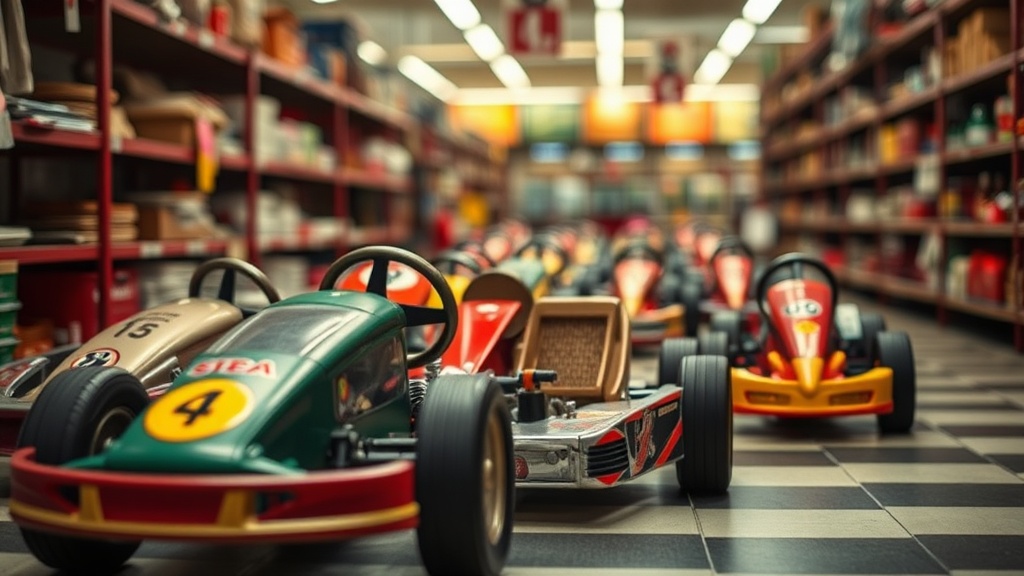
Finding Rare Die-Cast Karts in Local Thrift Stores

Have you ever walked into a local thrift shop and wondered if the dusty bin in the corner holds a hidden Nintendo treasure? This guide breaks down the exact methods for identifying, sourcing, and verifying rare die-cast Mario Kart models at thrift stores and local charity shops. We'll look at what to look for, how to spot counterfeits, and how to manage your finds without breaking the bank.
What are the most valuable die-cast Mario Kart models?
The most valuable die-cast Mario Kart models are typically limited edition releases from brands like Tomica, Takara Tomy, or vintage Nintendo-branded merchandise. While most thrift store finds will be common mass-market items, specific variations or older-generation figures can command much higher prices on the secondary market. Keep an eye out for the "Gold" or "Silver" editions, as these are often highly sought after by completionists.
When you're scanning the toy aisles, don't just look for the name "Mario." Look for the branding. A genuine Mario Kart die-cast piece often carries a specific weight and paint finish that distinguishes it from generic plastic toys. The weight is a dead giveaway. If it feels light and hollow, it's likely a cheap knock-off or a low-tier promotional item. If it has a heavy, metallic heft, you've found something worth a second look.
Here is a quick breakdown of what to prioritize during your hunt:
- Limited Edition Variants: Gold, Silver, or translucent colors.
- Vintage Packaging: Even if the box is damaged, the original packaging adds massive value.
- Brand Specifics: Look for Takara Tomy or Nintendo-branded stamps on the underside.
- Condition: Unopened blister packs are the holy grail.
I once found a near-mint Bowser kart in a tiny shop outside of Burlington that had been sitting in a bin for months. It wasn't even labeled as a collectible—just "toy car." That's the beauty of the hunt.
How do you identify a fake die-cast kart?
You identify a fake by checking the weight, the paint texture, and the manufacturer's markings on the bottom of the vehicle.
Pay close attention to the paint. High-end die-cast models use a specific type of lacquer that stays smooth. If you see "bubbling" or if the paint looks thin and streaky, it's a sign of a lower-quality counterfeit. Also, look at the wheels. Real die-cast cars usually have high-detail wheels that fit snugly. Cheap-looking, oversized, or loose wheels are a common trait of bootleg items found in bargain bins.
One trick I use is to check the "seam lines." On a real die-cast model, the lines where the metal parts meet are incredibly tight. On a fake, these seams are often messy or uneven. It's a small detail, but it's the difference between a $50 find and a $2 disappointment. If you're worried about a piece you already own, you might want to check out my tips on preserving the shine on vintage karting figures to ensure you're maintaining the quality of your authentic pieces.
| Feature | Authentic Die-Cast | Common Counterfeit |
|---|---|---|
| Weight | Heavy, solid feel | Light, hollow feel |
| Paint Finish | Smooth, high-gloss | Grainy or uneven |
| Underside | Clear manufacturer stamp | Blank or blurry text |
| Wheel Fit | Snug and precise | Loose or wobbly |
Where are the best places to find collectibles?
The best places to find die-cast collectibles are local thrift stores, estate sales, and small-town antique shops. These locations often have lower turnover and less "expert" oversight than large retailers or online marketplaces. Because these shops aren't always specializing in gaming memorabilia, you can often find high-value items tucked away in general toy bins for a fraction of their actual value.
Don't limit yourself to just the "Toy" section. Sometimes, these items end up in the "Home Decor" or "Oddities" sections if the person sorting the donations didn't recognize them. I've seen people overlook a perfectly good Mario Kart figure because it was sitting next to a pile of old kitchenware. It's a matter of looking where others aren't.
Here's the thing: the more "unpolished" the shop, the better your chances. A high-end boutique isn't going to have a bargain bin of $3 karts. A dusty thrift store in a rural area or a local charity shop is your best bet. These places rely on donations, meaning the inventory is unpredictable. That unpredictability is exactly what you want. You're looking for the one person who donated a collection without knowing its true worth.
It's also worth checking out local community boards or even local government-run flea markets. Sometimes, local community centers hold sales where the inventory is donated by residents. These are goldmines for collectors who have the patience to dig. You'll need a bit of grit to get through the dust, but the payoff is worth it.
When you do find something, don't immediately shout "I found a treasure!" if you're in a small shop. It's a bit of an unwritten rule in the collecting community. Be polite, buy your item, and then do your research once you've left. It keeps the environment friendly for everyone.
If you're looking for more specific data on product releases, the official Nintendo website is a great place to verify current and historical product lines. This can help you cross-reference what a "real" product should look like compared to the oddities you find in the wild.
Keep your eyes peeled and your eyes on the prize. The hunt is half the fun. Whether you find a common racer or a rare gold edition, every trip to the thrift store is a chance to grow your collection without a massive budget. Just remember to check the weight and the stamp. Happy hunting.