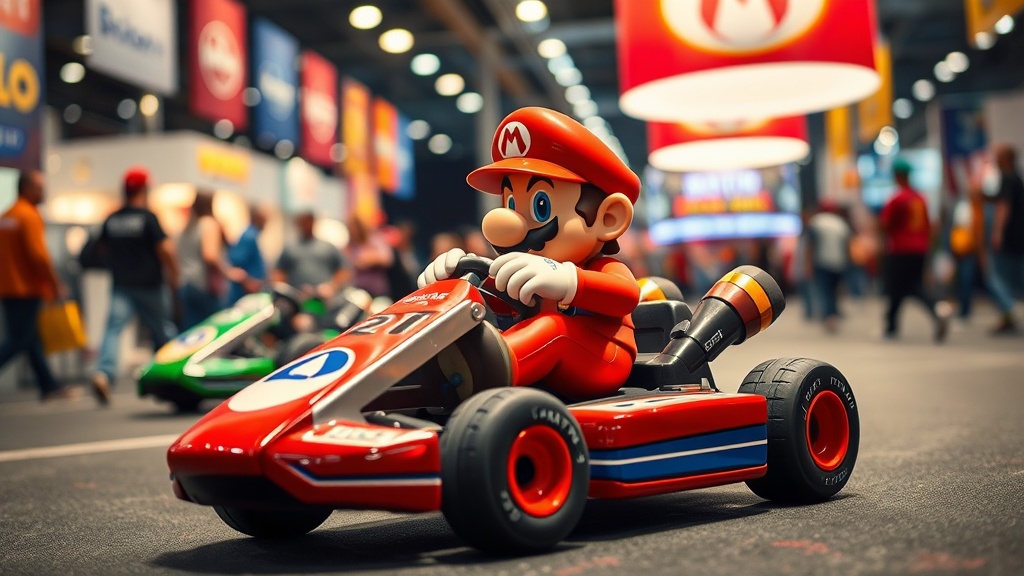
Hunting Rare Mario Kart Merchandise at International Conventions

Less than 5% of Mario Kart merchandise produced during the early 2000s reaches the secondary market in mint condition. This post explores how to identify, track, and successfully acquire high-value Mario Kart collectibles at international gaming conventions like Tokyo Game Show or Gamescom. We'll look at the logistics of international hunting, how to spot high-quality items, and how much you should actually spend to secure a rare piece.
International conventions are the highest-stakes environment for any serious collector. You aren't just walking through a mall; you're entering a battlefield of specialized dealers and high-end vendors. If you want the rare die-cast models or the limited edition apparel that most people never see, you have to change how you approach the floor.
How Much Does Rare Mario Kart Merchandise Cost?
Prices for rare Mario Kart collectibles at international conventions typically range from $50 for common figures to upwards of $1,500 for rare, unreleased prototypes or high-grade graded items. The cost depends entirely on the scarcity of the item and its verified provenance. A standard Mario Kart 8 Deluxe amiibo won't break the bank, but a vintage, unopened promotional item from a Japanese-only event will command a premium.
When you're standing in front of a booth in Tokyo or Cologne, you'll see a wide spectrum of pricing. It's helpful to have a baseline. I always keep a spreadsheet of recent sales from sites like eBay to ensure I'm not overpaying on the spot. If a vendor is asking for $400 for a standard plastic figure, walk away.
Here is a quick breakdown of what you can expect to pay for different tiers of items:
| Item Tier | Example Item | Typical Price Range (USD) |
|---|---|---|
| Common | Standard Amiibo or Basic Figures | $15 - $30 |
| Mid-Tier | Limited Edition T-Shirts/Apparel | $40 - $85 |
| High-Tier | Numbered Die-Cast Models | $100 - $300 |
| Ultra-Rare | Convention-Exclusive Prototypes | $500+ |
Don't forget to factor in the "travel tax." If you're buying an item in Japan to bring back to the US, you're also paying for the shipping-weight-to-value ratio. A heavy die-cast set is much harder to transport than a lightweight plushie.
Where Can You Find the Best Mario Kart Collectibles?
The best Mario Kart collectibles are found at major international gaming conventions and specialized hobbyist expos. While local shops are fine for basics, the "holy grail" items—the ones that actually move the needle on a collection—are usually tucked away in booth corners at events like the Gamescom expo or specific Nintendo-centric pop-up events in Asia. These locations offer a concentrated density of vendors who specialize in exactly what you're hunting.
I've found that the most valuable items aren't always on the main display. Often, the best stuff is in the "back stock" or the specialized cases held by vendors who focus on vintage gaming. If a vendor has a sign for Nintendo, they might just have standard merchandise. If they have a sign for "Vintage/Retro Gaming," that's where you'll find the gold. This is where you might find the older, more obscure items that make a collection stand out.
Before you head out, make sure you've mastered the basics of your specific niche. If you're focusing on the metal models, you should check out The Ultimate Guide to Building Your Mario Kart Die-Cast Collection. It'll help you recognize quality versus cheap imitations when the pressure is on.
A few tips for navigating these crowds:
- Arrive Early: The best vendors set up their best stock during the morning hours.
- Carry a Small Scale: Some collectors actually carry small digital scales to verify weight on certain die-cast models (though this is rare, it's a pro move).
- Check the Seals: Always look at the adhesive on any packaging. If it's a "new" item at a convention, the seal should be pristine.
- Use a Digital Scanner: Use your phone to quickly look up the item on a database to see if it's a known reproduction.
How Do You Identify Authentic Mario Kart Merchandise?
Authenticity is verified by examining the manufacturing marks, packaging details, and the weight of the physical object. Genuine Nintendo-licensed products will almost always have specific copyright text (© Nintendo) and specific manufacturer marks that are difficult to replicate perfectly on bootleg items. A heavy, high-quality die-cast model will feel significantly different from a lightweight plastic imitation.
Bootlegs are a real problem at international shows. They look good from five feet away, but they fall apart under scrutiny. I always look for the "feel" of the product. A real Mario Kart die-cast model has a certain heft and a specific paint finish that a cheap knock-off just can't mimic. The edges of the casting should be smooth, not jagged or rough.
One way to avoid a bad purchase is to look at the packaging. A genuine, high-end collectible will have crisp, high-resolution graphics. If the colors look washed out or the text is blurry, it's a red flag. It's a simple way to protect your investment. If you're worried about how to handle these items once you get them home, read about keeping your display dust-free to ensure they stay in top shape.
"The difference between a collector and a buyer is the ability to spot a fake in a crowded room. Don't let the hype of a convention distract you from the physical reality of the product."
If you're unsure, ask the vendor direct questions. "Is this an official Nintendo release?" "Do you have the original receipt or provenance?" A legitimate dealer will be happy to answer. A shady one will get defensive. That's your cue to move to the next booth.
It's also worth noting that many of these "rare" items are actually just limited production runs. A piece might be rare not because it was a "special event" item, but because the production numbers were low. This is why many collectors focus on the unspoken truths about collectible values—understanding the difference between "rare" and "valuable" is everything. A rare item that no one wants is just a paperweight.
When you're at a convention, you're often looking at items that have been through the wringer. Check for "shelf wear." This includes scuffs on the plastic windows of the boxes or bent corners. Even a tiny bit of damage can drop the value of a collectible by 30% or more. If you're buying a high-end piece, demand a box that is as close to mint as possible.
The hunt is part of the fun. But don't let the excitement lead to a bad decision. I've seen people drop hundreds of dollars on a "limited edition" figure that was actually a mass-produced item from a discount retailer. Stay disciplined. Stay skeptical. The best finds are the ones that stand up to your scrutiny.